PreK & Kindergarten Number Recognition Made Fun: Dab-a-Dot Worksheets Explained
What Is a Dab-a-Dot Number Worksheet?
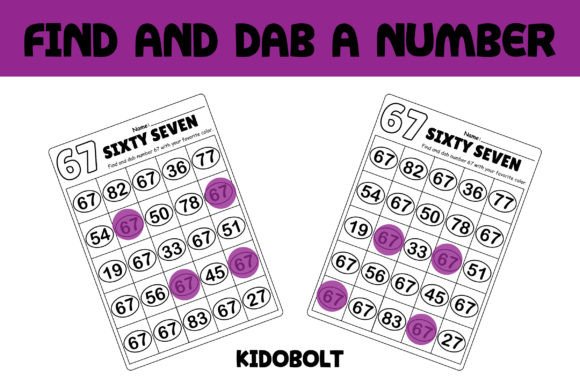
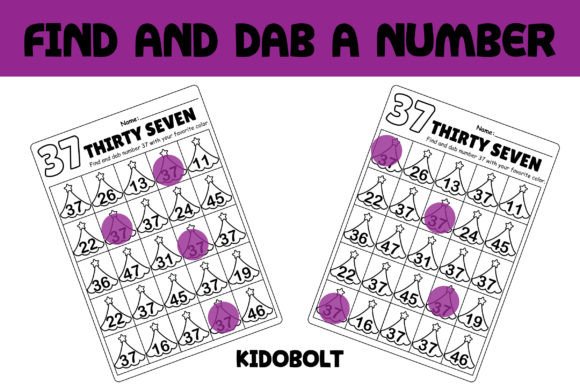
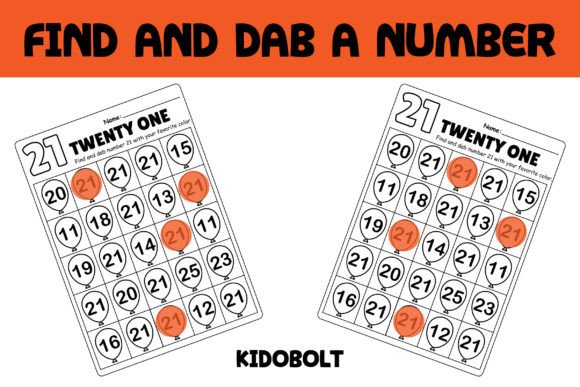
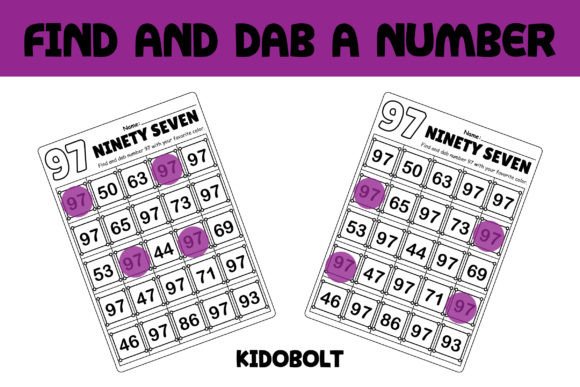
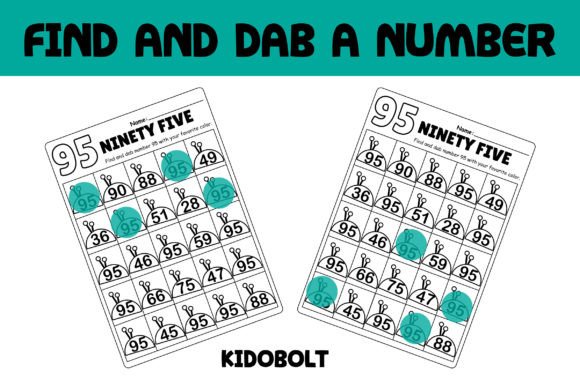
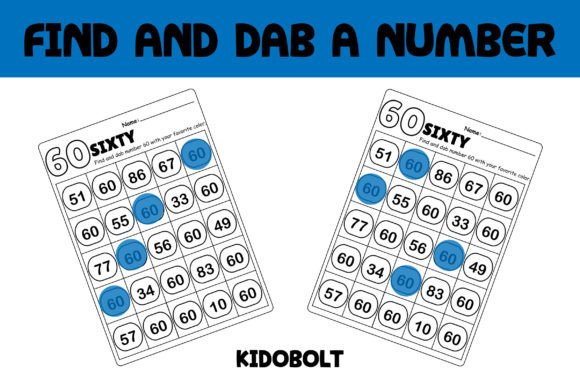
A Dab-a-Dot Number Worksheet is a hands-on, interactive learning tool designed specifically for early childhood education—especially for preschoolers (PreK) and kindergartners. These printable worksheets feature large, clear numerals (0–20 or beyond) surrounded by dots, shapes, or themed graphics. Children use dabbers—small, sponge-tipped tools filled with washable ink—to “dot” or mark the correct number, match quantities, or identify numerals visually.
The PreK Dab a Dot Number Worksheet – 60 and Kindergarten Number Dab a Dot Printable Worksheet are high-resolution JPG files (300 DPI), ensuring crisp printing for classroom or home use. Each worksheet supports foundational math skills through play-based repetition—a key principle in early literacy and numeracy development.
Why Number Recognition Matters at This Age
Number recognition—the ability to instantly name a numeral—is one of the earliest and most critical building blocks of mathematical understanding. It’s not just about saying “5” when seeing the symbol “5.” It’s the bridge between concrete counting (e.g., five blocks) and abstract thinking (e.g., “5” represents a quantity, appears on clocks, price tags, calendars, and game boards).
Children who struggle with number identification often face downstream challenges in counting, one-to-one correspondence, addition, and even time-telling or money concepts later on. That’s why educators and parents increasingly turn to tactile, multisensory strategies like Dab-a-Dot activities—not as a “fun extra,” but as an evidence-informed intervention.
How Dab-a-Dot Worksheets Support Learning
These worksheets go beyond simple tracing or coloring. Here’s how they meaningfully support development:
- Motor Skill Development: Squeezing a dabber strengthens hand muscles and refines pincer grip—essential for writing, cutting, and self-care tasks.
- Visual Discrimination: Children learn to distinguish similar-looking numerals (e.g., 6 vs. 9, 1 vs. 7) through repeated, focused exposure.
- Working Memory & Attention: Following instructions (“Find all the 3s and dab them”) builds focus, short-term recall, and task persistence.
- Confidence Through Success: Large fonts, uncluttered layouts, and immediate visual feedback help children experience mastery—even if they’re still developing fine motor control.
More Than Just a Dabber: Creative Adaptations
While traditional dabbers are popular, flexibility is key—especially for diverse learners. You can easily adapt these worksheets using:
- Decorative stamps (number-shaped or thematic, like apples or stars)
- Dry-erase markers on laminated sheets for reusable practice
- Pompoms or buttons glued or placed with tweezers to build coordination
- Stickers (number-themed or generic) for fine motor + visual matching
- Finger painting or cotton swabs for sensory-rich alternatives
This adaptability makes Dab-a-Dot worksheets ideal for inclusive classrooms, homeschool routines, occupational therapy sessions, or summer skill maintenance—all while keeping engagement high.
Perfect for Back-to-School Assessment
At the start of the school year, teachers need quick, low-pressure ways to gauge incoming knowledge. Rather than formal testing, a “Number of the Day” Dab-a-Dot activity serves as both a warm-up and an informal diagnostic tool. As children work independently or in small groups, educators observe:
- Which numerals they recognize instantly
- Whether they confuse orientation (e.g., flipping 2 or 5)
- How confidently they count aloud while dabbing
- Emerging patterns in errors (e.g., consistently missing teens)
This real-time insight helps shape differentiated instruction—grouping students by need, selecting targeted interventions, and setting individual goals without labeling or stress.
Real-World Relevance: Why This Skill Extends Beyond the Classroom
Strong number recognition isn’t just about passing kindergarten assessments—it’s woven into daily life. Think about how often young children encounter numbers outside school:
- Reading bus numbers or apartment addresses
- Following recipes with measurements (“add 2 cups”)
- Understanding timers (“wait 5 minutes”)
- Playing board games with dice or spinners
- Navigating digital devices (clocks, apps, remote controls)
When children recognize numbers fluently, they gain independence, reduce frustration, and begin to see math as accessible—not intimidating. That mindset shift lays groundwork for lifelong confidence in STEM fields, financial literacy, and data interpretation.
Common Misconceptions—Clarified
Misconception: “Dab-a-Dot is just busywork—it doesn’t teach anything meaningful.”
Reality: When intentionally designed and guided, it reinforces neural pathways tied to symbol-quantity association. Repetition + sensory input = stronger memory encoding.
Misconception: “If my child knows numbers 1–10, they’re ready for addition.”
Reality: Recognition ≠ understanding. A child may say “8” correctly but still struggle to count out eight objects or identify “8” among mixed numerals. Dab-a-Dot worksheets provide the varied practice needed to move from rote naming to true fluency.
Misconception: “Only struggling learners need this kind of practice.”
Reality: All young learners benefit from multimodal reinforcement. Even advanced students deepen conceptual understanding when they explain *why* a numeral looks that way—or teach a peer how to dab the correct number.
Getting Started: Tips for Parents & Educators
Here’s how to maximize impact with your PreK Dab a Dot Number Worksheet – 60 or Kindergarten Number Dab a Dot Printable Worksheet:
- Start small: Choose 3–5 numerals per session—not the full set. Celebrate accuracy over speed.
- Pair with language: Say each number aloud, connect it to real objects (“This is 4. Can you find four crayons?”).
- Rotate materials weekly: Switch from dabbers to stickers to stamps to sustain interest and target different skills.
- Display progress: Hang completed sheets on a “Number Wall” to reinforce growth and ownership.
- Involve families: Send home a worksheet with a note suggesting playful practice—like spotting numbers on street signs during walks.
Share Your Learning Journey
We love seeing how educators and families bring these resources to life! Did you make something using this product? Whether you turned the worksheet into a bulletin board display, used it for a math center rotation, or adapted it for a child with sensory needs—we invite you to share a picture of your project.
Your post will be visible to others on this page—and on your own social feed—helping fellow teachers, therapists, and caregivers discover fresh ideas, build community, and celebrate everyday wins in early math.
Because when learning feels joyful, purposeful, and personal, children don’t just memorize numbers—they begin to think like mathematicians.