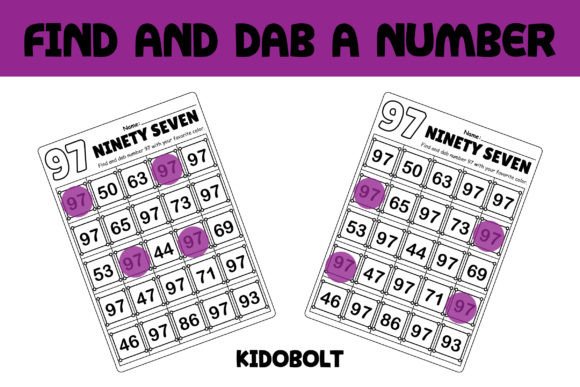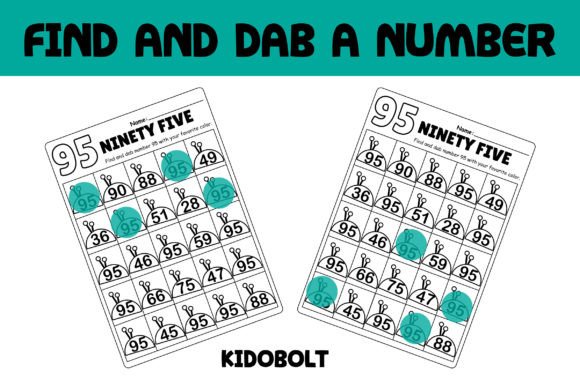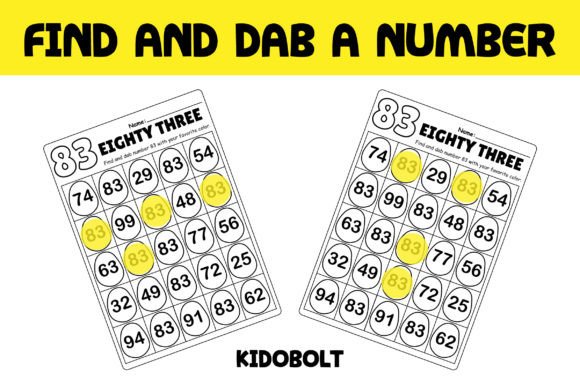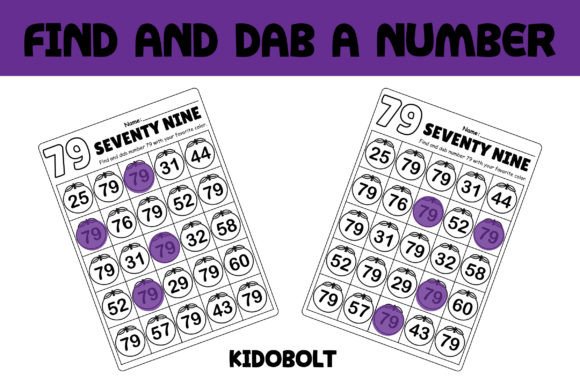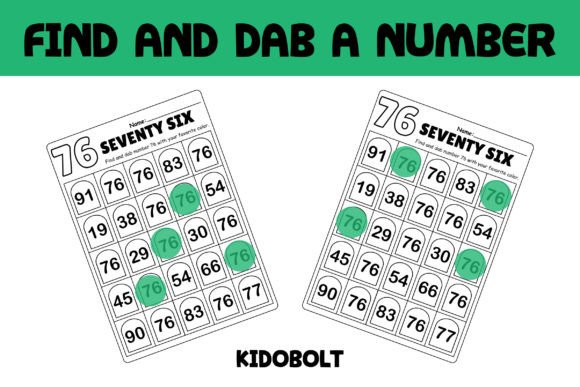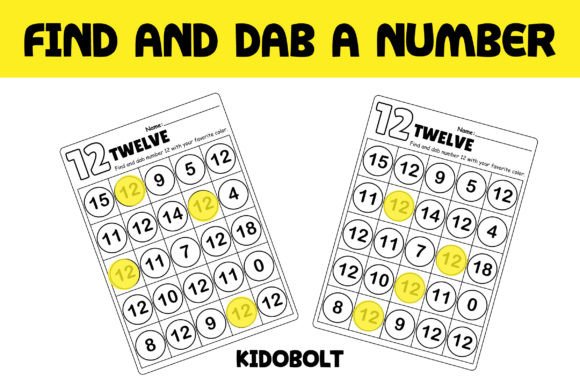
PreK Dab a Dot Number Worksheet - 12
When early numeracy skills lag—especially in preschool and kindergarten—the gap isn’t just about counting. It’s about confidence, attention, fine motor control, and the quiet, cumulative effect of repeated, low-stakes practice. The PreK Dab a Dot Number Worksheet - 12 isn’t a novelty item or classroom filler. It’s a precision tool: a 300 DPI JPG designed for clarity, consistency, and cognitive scaffolding. Its value emerges not from how it looks, but how—and why—you deploy it.
Why This Specific Format Works Strategically
At first glance, the PreK Dab a Dot Number Worksheet - 12 appears simple: numbers 1 through 12, each repeated multiple times, spaced for easy dabbing. But simplicity here is intentional design—not absence of strategy. The 300 DPI resolution ensures crisp lines and unambiguous number forms, reducing visual ambiguity for developing eyes. That matters when distinguishing “6” from “9”, or “12” from “21”. Unlike handwritten or low-resolution printouts, this file eliminates interpretation noise—letting the child focus on recognition, not decoding distortion.
More importantly, the worksheet supports dual-track learning: number identification and one-to-one correspondence. When a child dabs five dots beside the numeral “5”, they’re not just matching symbol to sound—they’re reinforcing quantity, sequence, and spatial awareness. That layered reinforcement is what makes the PreK Dab a Dot Number Worksheet - 12 more than a coloring sheet. It’s an assessment-ready, skill-building scaffold that works silently in the background of daily routine.
When and How to Use It—With Purpose
Timing determines impact. Using the PreK Dab a Dot Number Worksheet - 12 haphazardly—say, as a time-filler during transition minutes—wastes its potential. Used intentionally, it becomes part of a deliberate progression:
- Beginning-of-year baseline: Administer the full set (1–12) during the first week. Observe which numbers trigger hesitation, reversal, or omission—not just errors. Note whether a child dabs correctly but slowly, or rushes and miscounts. That data informs small-group planning far better than a single oral quiz.
- Daily number-of-the-day integration: Rotate one number per day across a two-week cycle. Pair dabbing with verbal rehearsal (“This is twelve. Twelve has a one and a two.”), tactile tracing (finger over the numeral), and real-world anchoring (“We have twelve crayons in this box”). Repetition without redundancy.
- Motor-skill pairing: For children with emerging hand strength or coordination, substitute dabbers with alternatives—pompoms pressed with tweezers, buttons glued with glue dots, or stamps inked with washable pads. Each variation targets different muscle groups while preserving the core cognitive task.
This isn’t about “keeping kids busy.” It’s about embedding repetition inside engagement—so practice feels like play, not pressure.
Risks of Unintentional Use
Without clear goals, even well-designed tools backfire. Relying solely on the PreK Dab a Dot Number Worksheet - 12 without follow-up risks surface-level mastery: a child may dab “7” confidently but still struggle to find “7” in a mixed-number line, or write it independently. Worse, overuse without variation can dull responsiveness—especially for children who thrive on novelty or multi-sensory input.
Also consider equity: not every child has access to dabbers, stamps, or stickers at home. If assigning this as homework without alternatives—or without explicit guidance for caregivers—the activity may widen, rather than close, the practice gap. Intentional use means anticipating those constraints and building in flexibility from the start.
Extending Value Beyond Recognition
The PreK Dab a Dot Number Worksheet - 12 gains long-term utility when treated as a modular component—not a standalone product. For example:
- For educators: Layer it into formative assessment systems. Track progress weekly using a simple grid: date, number attempted, accuracy, speed (timed to 15 seconds), and observed strategy (e.g., “counted aloud,” “pointed to each dot,” “glanced then dabbled”). Patterns emerge faster than you’d expect—revealing whether a child needs numeral formation support, subitizing practice, or language scaffolding.
- For creators and small business owners: This worksheet is a high-leverage asset for digital product bundles. Pair it with editable number cards, a parent guide on early math milestones, and a short video demo (under 90 seconds) showing three ways to adapt the activity. That transforms a $3 download into a $12 foundational resource—with tangible differentiation in a crowded educational marketplace.
- For homeschoolers and caregivers: Use it as a diagnostic checkpoint every 3–4 weeks. Don’t just record “got 10/12 right.” Note *how* the child engaged: Did they skip “11” consistently? Did they dab “12” but say “twelve” with uncertainty? Those observations inform what to emphasize next—not just what to teach, but how to listen.
Designing Around the Child, Not the Worksheet
The most effective users of the PreK Dab a Dot Number Worksheet - 12 treat it as a mirror—not a script. They watch closely: Does the child look at the numeral before dabbing, or scan the page randomly? Do they count dots aloud, or rely on shape recognition? That observation shapes the next move—whether it’s introducing a number line, adding tactile sandpaper numerals, or shifting to oral-only games like “I’m thinking of a number between 8 and 10.”
It also informs communication. When sharing progress with families, avoid vague praise like “She loves dabbing!” Instead, say: “She now identifies all numbers 1–12 accurately when presented in isolation—and she’s beginning to recognize ‘11’ and ‘12’ in sequences. Next, we’ll practice writing them while saying the name aloud.” That specificity builds trust, aligns expectations, and turns informal practice into visible growth.
Long-Term Positioning: Why This Matters Beyond Kindergarten
Early number recognition isn’t isolated. It’s the foundation for place value understanding, mental math fluency, and even later problem-solving stamina. A child who confidently identifies “12” at age 5 is more likely to approach “12 + 8” at age 7 with curiosity than avoidance. The PreK Dab a Dot Number Worksheet - 12 contributes to that trajectory—not by accelerating development, but by strengthening the understructure so learning can scale reliably.
From a branding or operational perspective, consistency matters. Using the same high-resolution, clearly formatted worksheet across classrooms, grade levels, or even years creates continuity. Families recognize it. Substitutes understand it. Data becomes comparable. That operational coherence compounds quietly—freeing mental bandwidth for higher-order decisions instead of re-inventing basic tools.
Final Strategic Note
The PreK Dab a Dot Number Worksheet - 12 succeeds only when aligned with a clear objective: What specific skill are you reinforcing? What behavior are you observing? What decision will this inform tomorrow? Without that anchor, it’s just ink on a screen. With it, it becomes a lever—one small, precise, repeatable action that moves the needle on numeracy, confidence, and classroom culture. Use it deliberately. Adapt it thoughtfully. Measure what matters—not just completion, but cognition in motion.